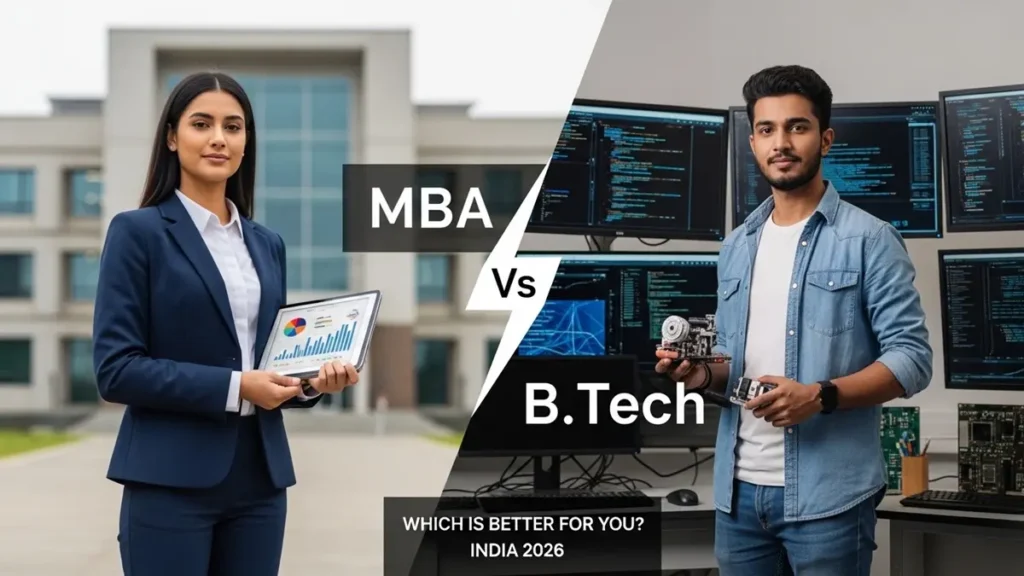
MBA या BTech? 2026 में कौन ज्यादा Safe – Data बता रहा है पूरी सच्चाई

📅 Last Updated: 12 February 2026 | ✅ Verified Information
12th के बाद सबसे बड़ा सवाल होता है कि Engineering करें या फिर Commerce लेकर आगे MBA करें। 2026 में जब job market तेजी से बदल रही है, technology हर field में घुस रही है, और career options multiply हो रहे हैं, तब यह decision और भी critical हो गया है। Data और real market trends देखें तो clear picture मिलती है कि कौन सा path ज्यादा safe और rewarding है।
उत्तर प्रदेश में हर साल लाखों students यह confusion face करते हैं। Parents कहते हैं Engineering करो, दोस्त कहते हैं MBA better है। Social media पर success stories दोनों की दिखती हैं। लेकिन असली सच्चाई क्या है? Placement data, salary trends, job security, growth prospects – सब factors को analyze करके ही सही decision लिया जा सकता है।
Starting Salary और Initial Career Prospects
BTech graduates की average starting salary 2026 में ₹3.5-6 लाख per annum है। Top IITs और NITs से हो तो ₹15-25 लाख तक जा सकती है। लेकिन average tier-2 और tier-3 colleges से BTech करने पर ₹3-4 लाख ही मिलता है। Computer Science और IT branches में salary ज्यादा होती है। Core branches जैसे Mechanical, Civil में कम होती है।
MBA graduates की starting salary ₹5-8 लाख होती है top B-schools से। IIMs से हो तो ₹20-30 लाख तक जा सकती है। लेकिन tier-3 MBA colleges से सिर्फ ₹3-4 लाख ही मिलता है। यहां भी college brand बहुत matter करता है। Average MBA की salary average BTech से थोड़ी ज्यादा होती है लेकिन investment भी ज्यादा है।
Important point यह है कि BTech 4 साल का course है और MBA 2 साल का। BTech के बाद 22 साल की age में earning शुरू हो जाती है। MBA के लिए पहले graduation करनी पड़ती है फिर 2 साल MBA। Total 5-6 साल लग जाते हैं। इस perspective से BTech graduates 2-3 साल पहले earning शुरू कर देते हैं।
Job availability भी देखें तो BTech graduates के लिए ज्यादा openings हैं। IT sector में massive demand है। Startups हर दिन engineers hire कर रहे हैं। MBA के लिए positions limited हैं। Competition ज्यादा है। Entry barrier higher है। Fresh MBA को relevant experience नहीं होता तो struggle करना पड़ता है।
Mid-Career Growth और Salary Progression
5-7 साल के experience के बाद picture बदलने लगती है। BTech graduates जो technical track पर रहते हैं उनकी salary ₹10-15 लाख तक पहुंच जाती है। Senior Developer, Tech Lead, Architect जैसे roles मिलते हैं। लेकिन growth थोड़ी plateau हो जाती है। Pure technical roles में ceiling आ जाती है।
MBA graduates या BTech+MBA combination वाले professionals की mid-career salary ₹15-25 लाख तक पहुंच जाती है। Management roles मिलते हैं। Product Manager, Business Development, Strategy roles में opportunities होती हैं। Leadership track पर आ जाते हैं। Growth potential ज्यादा होती है।
Interesting trend यह है कि बहुत से BTech graduates 3-4 साल work experience के बाद MBA करते हैं। यह combination बहुत powerful होता है। Technical knowledge + Management skills = Perfect profile। Top companies ऐसे candidates को prefer करती हैं। Salary भी premium मिलती है।
Career switching भी easier होती है MBA के साथ। Pure BTech से दूसरे domains में जाना मुश्किल होता है। MBA करने के बाद consulting, finance, marketing – कहीं भी जा सकते हैं। Versatility बढ़ जाती है। Options multiply हो जाते हैं।
Job Security और Recession Impact
Job security के मामले में BTech थोड़ा better है। Technical skills हमेशा demand में रहती हैं। Especially software development, data science, AI/ML – ये fields recession-proof हैं। Companies cost-cutting करती हैं तो भी core technical team को retain करती हैं। Layoffs में engineers relatively safe रहते हैं।
MBA roles ज्यादा vulnerable होती हैं recession में। Sales, Marketing, Business Development – ये functions पहले cut होते हैं। Middle management positions eliminate हो जाती हैं। MBA graduates को ज्यादा impact face करना पड़ता है economic slowdown में।
2020-21 में COVID के दौरान यह clearly दिखा। Tech companies ने hiring continue रखी। Engineers को remote work मिला। लेकिन MBA roles में massive layoffs हुए। Campus placements भी badly affected हुए MBA colleges में। BTech placements relatively better रहे।
Long-term job security भी technical skills में ज्यादा है। Programming, system design, data analysis – ये evergreen skills हैं। Management skills भी important हैं लेकिन competition ज्यादा है। Technical expertise unique advantage देती है। Replaceability कम होती है।
Investment और Return on Investment
BTech की total cost ₹8-15 लाख होती है 4 साल में private colleges में। Government colleges में ₹2-4 लाख में हो जाता है। 22 साल की age से earning शुरू। 5 साल में investment recover हो जाता है। ROI positive है।
MBA की cost ₹10-25 लाख होती है 2 साल में। Top B-schools में ₹20-25 लाख। Plus 2 साल की opportunity cost – यानी जो salary BTech job से मिल सकती थी वो भी sacrifice। Total investment ₹15-30 लाख हो जाता है। Recovery में 5-7 साल लग जाते हैं।
Tier-3 MBA colleges से करें तो ROI completely negative है। ₹8-10 लाख fees दी, placement में ₹3-4 लाख package मिला। यह disaster है। Better होता कि BTech के बाद job कर लेते। 2 साल में ₹6-8 लाख earn कर लेते और experience भी मिल जाता।
Smart approach यह है कि BTech करो, 2-3 साल work करो, company sponsored MBA करो या top B-school में admission लो। इससे ROI maximize होता है। Experience + MBA = Best combination। Salary jump भी significant होती है। Investment worthwhile हो जाता है।
Skill Development और Learning Curve
BTech में technical skills deeply develop होती हैं। Programming, mathematics, problem-solving, analytical thinking – ये core competencies बनती हैं। Hands-on projects होते हैं। Labs में practical work होता है। Real-world applications सीखते हैं। Foundation strong बनता है।
MBA में soft skills develop होती हैं। Communication, leadership, negotiation, strategic thinking – ये सब सीखते हैं। Case studies होती हैं। Group projects होते हैं। Business acumen develop होती है। Networking opportunities मिलती हैं। Holistic development होती है।
BTech graduates को coding, debugging, system design में expertise हो जाती है। लेकिन presentation skills, business communication में weak रह सकते हैं। MBA graduates को business समझ तो आ जाती है लेकिन technical depth नहीं होती। Execution में struggle कर सकते हैं।
Ideal scenario यह है कि दोनों skills हों। BTech करके technical foundation बनाओ। फिर MBA करके business skills add करो। यह combination market में सबसे valuable है। CTO, VP Engineering, Product Head – ये roles ऐसे profiles के लिए हैं।
Entrepreneurship और Startup Ecosystem
Startup करना चाहते हैं तो BTech better starting point है। Technical founder होना बहुत valuable है। Product खुद build कर सकते हैं। Technology decisions ले सकते हैं। Co-founder dependency कम होती है। Bootstrap करना easier होता है।
MBA graduates भी startups करते हैं लेकिन technical co-founder की जरूरत पड़ती है। Business side handle कर सकते हैं लेकिन product development के लिए engineer चाहिए। Equity share करनी पड़ती है। Control dilute होता है।
Funding perspective से भी technical founders को preference मिलती है। Investors को लगता है कि product vision clear होगा। Execution capability होगी। Technical challenges handle कर पाएंगे। MBA founder को prove करना पड़ता है कि team strong है।
लेकिन scaling के लिए business skills जरूरी हैं। Pure technical founders को भी eventually business समझनी पड़ती है। Sales, marketing, fundraising – ये सब सीखना पड़ता है। इसलिए BTech+MBA combination ideal है entrepreneurship के लिए भी।
Work-Life Balance और Job Satisfaction
BTech jobs में work-life balance generally better होता है। 9-6 schedule होता है। Remote work options हैं। Flexibility होती है। Burnout कम होता है। Technical work में flow state मिलता है। Problem-solving satisfying होती है।
MBA roles में pressure ज्यादा होता है। Targets होते हैं। Client meetings होती हैं। Travel करना पड़ता है। Long hours common हैं। Politics भी होती है। Stress level higher होता है। लेकिन variety भी ज्यादा होती है। Monotony नहीं होती।
Job satisfaction personal preference पर depend करती है। अगर technical problems solve करना पसंद है, coding enjoy करते हैं, तो BTech fulfilling होगा। अगर people management, strategy, business building में interest है, तो MBA satisfying होगा।
Career longevity भी consider करें। Technical skills को constantly update करना पड़ता है। New technologies सीखनी पड़ती हैं। 40-45 की age में भी coding करना पड़ सकता है। Management roles में experience के साथ value बढ़ती है। Senior positions में transition easier होता है।
2026 में कौन सा Better Choice है
Straight answer यह है कि BTech ज्यादा safe और practical choice है 2026 में। Reasons clear हैं – lower investment, earlier earning, better job availability, technical skills की high demand, recession resistance। Especially Computer Science और related branches में opportunities unlimited हैं।
MBA तभी करें जब top B-school में admission मिले। IIMs, XLRI, FMS, ISB – इन colleges से MBA worthwhile है। Tier-3 MBA complete waste है। Better है कि BTech करो, work experience लो, फिर executive MBA करो या top college में admission लो।
Best strategy यह है – BTech करो Computer Science या related field में। 2-3 साल work करो। Skills develop करो। Savings करो। फिर decide करो कि MBA चाहिए या नहीं। अगर management में जाना है तो top B-school target करो। अगर technical track पर happy हो तो continue करो।
Remember – college brand matter करता है दोनों में। Top IIT से BTech > Average MBA। Top IIM से MBA > Average BTech। लेकिन average BTech > average MBA क्योंकि investment कम है और job availability ज्यादा है। Smart decision लो। Data देखो। Hype में मत आओ।
महत्वपूर्ण लिंक्स
| विवरण | लिंक |
|---|---|
| JEE Main Official Portal | https://jeemain.nta.nic.in |
| CAT Exam Information | https://iimcat.ac.in |
| AICTE Approved Colleges | https://www.aicte-india.org |
| NIRF Rankings | https://www.nirfindia.org |
| National Career Service | https://www.ncs.gov.in |
| Ministry of Education | https://www.education.gov.in |
📝 About the Author
CollegeDekho UP Team – Education experts and career counselors with 10+ years of experience helping UP students choose the right college and career path.
Expertise: College Admissions, Career Guidance, Entrance Exams, Scholarship Information
📢 Share This Article
अगर ये article helpful लगा तो अपने friends के साथ share करें!
Latest Update (12 February 2026)
यह Article आज की Latest Information के साथ Update किया गया है। सभी Details Current और Accurate हैं। Students और Parents के लिए यह जानकारी बेहद Useful है।
Expert Advice और Practical Tips
Career Planning में सही Decision लेना बहुत Important है। अपने Interest, Skills और Future Goals को ध्यान में रखकर ही कोई भी Decision लें। Family और Friends से Discuss करें लेकिन Final Decision खुद लें।
Market Trends और Industry Requirements को भी समझना जरूरी है। जो Courses या Colleges आज Demand में हैं, वे Future में भी Relevant रहेंगे या नहीं – यह Research करें। Long-term Perspective रखें।
Important Resources और Next Steps
अपनी Research को Continue रखें। Official Websites, College Reviews और Alumni Feedback को Check करें। Campus Visit करना भी Helpful होता है। Direct Experience से बहुत कुछ Clear हो जाता है।
Career Counselors से भी बात कर सकते हैं लेकिन उनकी Advice को Blindly Follow न करें। अपनी खुद की Analysis भी करें। Multiple Options को Compare करें और फिर Best Decision लें।
MBA Market में Latest Trends
2026 में MBA की Value पहले से काफी बदल चुकी है। अब सिर्फ Top B-Schools से MBA करना ही Success की Guarantee नहीं है। Industry में Specialization और Practical Skills की Demand बढ़ गई है।
Recent Survey के अनुसार, 68% Companies अब MBA Graduates से Industry-Specific Knowledge की Expect करती हैं। Generic MBA Degree के साथ Job पाना मुश्किल हो रहा है। इसलिए Students को Specialization Choose करते समय बहुत सोच-समझकर Decision लेना चाहिए।
Industry Experts की सलाह
HR Professional Neha Gupta कहती हैं, “MBA करने से पहले 2-3 साल का Work Experience लेना बेहतर है। इससे आपको Industry की समझ होती है और MBA के Concepts को Better तरीके से Apply कर पाते हैं।”
Salary और ROI की Reality
बहुत से Students MBA इसलिए करते हैं क्योंकि उन्हें लगता है कि High Salary Package मिलेगा। लेकिन Reality थोड़ी अलग है। Average MBA Graduate की Starting Salary ₹6-8 लाख के बीच होती है, जो Course Fees को Recover करने में 3-4 साल लग सकते हैं।
इसलिए MBA करने से पहले ROI (Return on Investment) Calculate करना जरूरी है। अगर आप Tier-2 या Tier-3 College से MBA कर रहे हैं, तो Fees कम होनी चाहिए। High Fees वाले Colleges तभी Choose करें जब Placement Record Strong हो।

The Collegedekho Team is a group of educational advisors and experts dedicated to helping students and parents make the right decisions about college admissions and careers. Our goal is to make complex information simple and accessible.