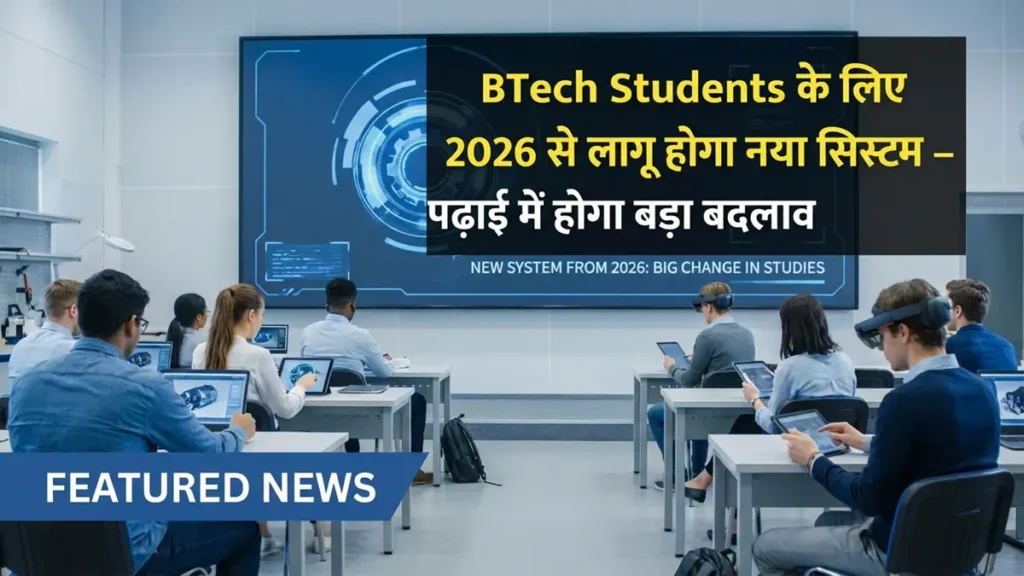
BTech Students Alert! 2026 से लागू होगा नया System – पढ़ाई में होगा बड़ा बदलाव

📅 Last Updated: 12 February 2026 | ✅ Verified Information
BTech students के लिए बड़ी खबर है। 2026 से engineering education में revolutionary changes आने वाले हैं। NEP 2020 (National Education Policy) के तहत नया credit-based system implement होगा। Multiple entry-exit options मिलेंगे। Curriculum में flexibility आएगी। यह changes पूरे engineering education को transform कर देंगे। Students, parents और colleges सभी को इन बदलावों के लिए ready रहना होगा।
AICTE (All India Council for Technical Education) ने detailed guidelines जारी कर दी हैं। 2026 academic session से सभी engineering colleges को नया system adopt करना होगा। उत्तर प्रदेश के 800 से ज्यादा engineering colleges इससे affected होंगे। लाखों students की पढ़ाई का तरीका बदल जाएगा। समझना जरूरी है कि exactly क्या बदलेगा और इसका impact क्या होगा।
Credit-Based System क्या है
अभी तक engineering में year-wise system था। First year, second year, third year, fourth year – ऐसे progress होता था। सभी students को same subjects पढ़ने पड़ते थे। कोई flexibility नहीं थी। Fail हो गए तो पूरा year repeat करना पड़ता था। यह rigid system था।
नए credit-based system में हर subject की कुछ credits होंगी। BTech complete करने के लिए total 160 credits earn करने होंगे। Students अपनी pace से credits complete कर सकते हैं। Fast learners 3.5 साल में degree complete कर सकते हैं। Slow learners को 5 साल तक का time मिलेगा।
Credits दो तरह की होंगी – core credits और elective credits। Core subjects compulsory होंगे जैसे Mathematics, Physics, Programming। Elective subjects में choice होगी। Students अपनी interest के according subjects choose कर सकते हैं। Specialization early stage से शुरू हो सकेगी।
Semester system भी बदलेगा। अभी 2 semesters होते हैं per year। नए system में flexible scheduling होगी। Summer semesters भी होंगे। Students चाहें तो extra courses कर सकते हैं। Fast track completion possible होगा। यह international universities जैसा system है।
Multiple Entry-Exit का मतलब
यह सबसे revolutionary change है। अभी तक BTech शुरू किया तो 4 साल complete करना compulsory था। बीच में छोड़ दिया तो कुछ नहीं मिलता था। Dropout students के पास कोई degree नहीं होती थी। यह बहुत unfair था।
नए system में multiple exit points होंगे। 1 साल complete किया और 40 credits earn किए तो Certificate मिलेगा। 2 साल complete किए और 80 credits earn किए तो Diploma मिलेगा। 3 साल complete किए और 120 credits earn किए तो Bachelor’s Degree मिलेगी। 4 साल complete किए और 160 credits earn किए तो BTech with Honours मिलेगा।
यह flexibility बहुत important है। अगर किसी student को financial problems हैं, family emergency है, या career change करना है, तो वो बीच में exit कर सकता है। उसके पास valid certificate/diploma/degree होगी। Wasted years नहीं होंगे। Resume में gap नहीं दिखेगा।
Re-entry भी possible होगी। अगर किसी ने 2 साल बाद diploma लेकर exit किया, फिर 2-3 साल बाद वापस आना चाहता है, तो वो remaining credits complete करके BTech कर सकता है। Credits 7 साल तक valid रहेंगे। यह working professionals के लिए बहुत useful है।
Curriculum में क्या बदलेगा
Curriculum में major changes होंगे। Outdated subjects हटाए जाएंगे। Industry-relevant subjects add होंगे। Practical learning पर ज्यादा focus होगा। Theory कम होगी, hands-on projects ज्यादा होंगे। Real-world problems solve करने पर emphasis होगा।
Interdisciplinary learning encourage होगी। Computer Science student चाहे तो Business Management के courses कर सकता है। Mechanical Engineering student Data Science सीख सकता है। Boundaries blur होंगी। Holistic education मिलेगी। T-shaped professionals develop होंगे।
Skill-based courses compulsory होंगे। Communication skills, critical thinking, problem-solving, teamwork – ये सब formally taught होंगे। Soft skills को importance मिलेगी। Industry readiness बढ़ेगी। Employability improve होगी।
Research और innovation को promote किया जाएगा। हर student को कम से कम एक research project करना होगा। Publications encourage होंगे। Innovation labs होंगी। Entrepreneurship courses होंगे। Startup culture develop होगा।
Internships और Industry Exposure
Internships अब compulsory होंगी। हर student को minimum 6 months की industry internship करनी होगी। यह credits में count होगी। Real work experience मिलेगा। Industry connect बनेगा। Placement chances improve होंगे।
Industry collaboration बढ़ेगा। Companies curriculum design में involve होंगी। Guest lectures होंगे। Industry mentors होंगे। Live projects होंगे। Academia-industry gap reduce होगा। Job-ready graduates निकलेंगे।
International exposure भी मिलेगा। Student exchange programs होंगे। Foreign universities के साथ tie-ups होंगे। Credits transfer possible होगा। Global perspective develop होगा। International opportunities खुलेंगी।
Assessment और Evaluation Changes
Exam pattern बदलेगा। Rote learning की बजाय application-based questions होंगे। Multiple choice questions कम होंगे। Case studies, projects, presentations ज्यादा होंगे। Continuous assessment होगा। Single final exam पर dependency कम होगी।
Grading system भी change होगा। Absolute grading की बजाय relative grading होगी। Grade inflation control होगा। Merit properly reflect होगी। Toppers और average students में clear distinction होगा।
Practical skills का evaluation होगा। Lab work, projects, internships – सब में marks होंगे। Theory knowledge के साथ practical competence भी measure होगी। Holistic assessment होगा। Overall development track होगा।
Students के लिए Advantages
Flexibility सबसे बड़ा advantage है। अपनी pace से पढ़ सकते हैं। अपनी interest के subjects choose कर सकते हैं। Career goals के according specialization कर सकते हैं। Personalized learning path बना सकते हैं।
Risk कम होगा। Fail हो गए तो पूरा year waste नहीं होगा। Sirf वो subject repeat करना होगा। Financial और time loss minimize होगा। Dropout होने पर भी certificate/diploma मिलेगा। Safety net होगा।
Employability बढ़ेगी। Industry-relevant skills सीखेंगे। Practical experience होगा। Soft skills develop होंगे। Companies को job-ready candidates मिलेंगे। Placement better होगी। Starting salary improve होगी।
Global opportunities खुलेंगी। Credit transfer से foreign universities में admission easier होगा। International standards follow होंगे। Degree globally recognized होगी। Higher studies के options बढ़ेंगे।
Challenges और Concerns
Implementation challenge होगा। Colleges को infrastructure upgrade करना होगा। Faculty को train करना होगा। Administrative systems change करने होंगे। Initial years में confusion हो सकता है। Smooth transition ensure करना difficult होगा।
Faculty shortage issue है। Specialized subjects के लिए qualified teachers चाहिए। Industry experts को hire करना होगा। Training programs conduct करने होंगे। Quality maintain करना challenge होगा।
Students को भी adjust करना होगा। Self-discipline जरूरी होगी। Planning skills develop करनी होंगी। Guidance लेनी होगी। Initially overwhelming feel हो सकता है। Support system चाहिए होगा।
Evaluation standardization concern है। Different colleges में different standards हो सकते हैं। Credits की value vary कर सकती है। Transfer करते समय issues आ सकते हैं। Regulatory oversight जरूरी होगी।
Parents को क्या जानना चाहिए
Parents को नए system को समझना होगा। Traditional mindset change करनी होगी। Flexibility को appreciate करना होगा। Students को explore करने देना होगा। Micromanagement से बचना होगा।
Financial planning important है। Variable duration की वजह से cost vary कर सकती है। 3.5 साल में complete हो सकता है या 5 साल लग सकते हैं। Budget accordingly plan करना होगा। Contingency रखनी होगी।
Career counseling जरूरी है। Students को guidance चाहिए होगी। Subject selection में help करनी होगी। Career goals clarify करने होंगे। Professional counselors से consult करना beneficial होगा।
Colleges को क्या करना होगा
Infrastructure upgrade करना होगा। Labs modernize करनी होंगी। Libraries expand करनी होंगी। Technology integrate करना होगा। Online learning platforms develop करने होंगे।
Faculty development priority होगी। Training programs conduct करने होंगे। Industry exposure देना होगा। Research encourage करना होगा। Quality faculty retain करनी होगी।
Industry partnerships build करने होंगे। MoUs sign करने होंगे। Internship opportunities create करनी होंगी। Guest lectures organize करने होंगे। Placement support strengthen करनी होगी।
Timeline और Implementation
2026 academic session से implementation शुरू होगा। First year students को नया system मिलेगा। Existing students पुराने system में continue करेंगे। Gradual transition होगा। 2029 तक पूरी तरह नया system हो जाएगा।
Pilot programs पहले से चल रहे हैं। कुछ premier institutes में test किया जा रहा है। Feedback collect किया जा रहा है। Improvements किए जा रहे हैं। Best practices identify की जा रही हैं।
Regular monitoring होगी। AICTE guidelines update होते रहेंगे। Colleges को compliance ensure करनी होगी। Accreditation में नया system factor होगा। Quality assurance mechanisms होंगे।
महत्वपूर्ण लिंक्स
| विवरण | लिंक |
|---|---|
| AICTE Official Website | https://www.aicte-india.org |
| NEP 2020 Full Document | https://www.education.gov.in/nep |
| UGC Guidelines | https://www.ugc.ac.in |
| Ministry of Education | https://www.education.gov.in |
| NIRF Rankings | https://www.nirfindia.org |
| National Academic Depository | https://nad.gov.in |
📝 About the Author
CollegeDekho UP Team – Education experts and career counselors with 10+ years of experience helping UP students choose the right college and career path.
Expertise: College Admissions, Career Guidance, Entrance Exams, Scholarship Information
📢 Share This Article
अगर ये article helpful लगा तो अपने friends के साथ share करें!
Latest Update (12 February 2026)
यह Article आज की Latest Information के साथ Update किया गया है। सभी Details Current और Accurate हैं। Students और Parents के लिए यह जानकारी बेहद Useful है।
Expert Advice और Practical Tips
Career Planning में सही Decision लेना बहुत Important है। अपने Interest, Skills और Future Goals को ध्यान में रखकर ही कोई भी Decision लें। Family और Friends से Discuss करें लेकिन Final Decision खुद लें।
Market Trends और Industry Requirements को भी समझना जरूरी है। जो Courses या Colleges आज Demand में हैं, वे Future में भी Relevant रहेंगे या नहीं – यह Research करें। Long-term Perspective रखें।
Important Resources और Next Steps
अपनी Research को Continue रखें। Official Websites, College Reviews और Alumni Feedback को Check करें। Campus Visit करना भी Helpful होता है। Direct Experience से बहुत कुछ Clear हो जाता है।
Career Counselors से भी बात कर सकते हैं लेकिन उनकी Advice को Blindly Follow न करें। अपनी खुद की Analysis भी करें। Multiple Options को Compare करें और फिर Best Decision लें।
Engineering में नए Opportunities
2026 में Engineering Field में AI, Machine Learning, और Data Science की Demand सबसे ज्यादा है। Traditional Branches जैसे Mechanical और Civil में Jobs कम हो रही हैं, जबकि Computer Science और IT में Opportunities बढ़ रही हैं।
NASSCOM की Latest Report के अनुसार, अगले 2 सालों में India में 2 लाख से ज्यादा Tech Jobs Create होंगी। लेकिन इन Jobs के लिए Modern Skills की जरूरत है। सिर्फ College की Degree से काम नहीं चलेगा।
Skills जो 2026 में जरूरी हैं
अगर आप Engineering Student हैं, तो ये Skills सीखना शुरू कर दें:
Python Programming – सबसे Important Skill है। Data Science, AI, Web Development सब में काम आती है। Free Resources जैसे Coursera और YouTube से सीख सकते हैं।
Cloud Computing – AWS, Azure, या Google Cloud में से कम से कम एक Platform सीखें। Companies अब Cloud-based Solutions पर Shift हो रही हैं।
Problem Solving – LeetCode, HackerRank जैसे Platforms पर Daily Practice करें। Interviews में Coding Questions पूछे जाते हैं।
Placement की तैयारी कैसे करें
Final Year से पहले ही Placement की Preparation शुरू कर दें। Resume बनाएं, Projects Complete करें, और Mock Interviews दें। College के Placement Cell से Regular Contact में रहें और Company Requirements को समझें।

The Collegedekho Team is a group of educational advisors and experts dedicated to helping students and parents make the right decisions about college admissions and careers. Our goal is to make complex information simple and accessible.